Dairy Beef Integration
The Pāmu dairy beef strategy is bold and designed to reshape the way dairy farming intersects with beef production.
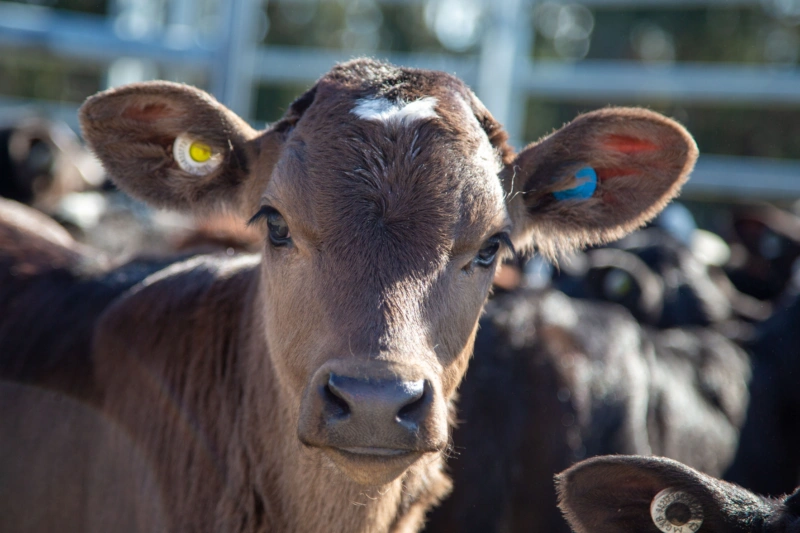
What is dairy beef?
Pāmu is aiming to rear all calves born on its dairy farms by 2030. Beef sires over dairy means non-replacement calves can be raised for meat production.
New Zealand’s dairy products are globally valued for their grass-fed origins. Unlike indoor systems used elsewhere, our cows graze outdoors – bringing seasonal challenges. Most calves are born in spring, requiring simultaneous rearing at scale. Significant changes to farm systems, capabilities in calf care, forage management, finishing, and processing are required to make dairy beef at scale attainable.
Calf-rearing facilities enabling dairy beef
The Pāmu dairy beef strategy is bold and designed to reshape the way dairy farming intersects with beef production. At its heart is a commitment to use all dairy calves in the company’s farming system by 2030, ensuring that every non-replacement dairy calf born on Pāmu farms is raised for low carbon protein. To achieve this, Pāmu is undertaking a farm system change that brings together its dairy, livestock, genetics, agronomy, and commercial teams. The strategy hinges on matching the right land with the right animals, using high-genetic-merit sires to produce calves that are well-suited for beef production. These calves are then raised in systems optimised for fast growth and feed efficiency, reducing greenhouse gas emissions and improving overall productivity.
Head of Innovation and Extension Paul McGill says operational changes are significant.
“Farm systems are being redesigned to accommodate larger numbers of calves, with adjustments to pasture management, infrastructure, and stock flows. Pāmu is investing in new calf-rearing facilities, expanding existing ones and partnering with industry rearers to support the increase in demand.”
The development of the Moutoa Calf Rearing Facility in FY25 is another example of strategy in action in the lower North Island. Located at Cheltenham Downs in the Manawatū and integrated into existing operations, the facility supports the company’s dairy beef ambitions as well as lifting productivity and demonstrating collaboration across teams.
The Moutoa initiative follows developments in other regions, including on the West Coast and central North Island, and is a blueprint for how strategic intent can be translated into meaningful, measurable impact across the Pāmu farming landscape.
“As our strategy continues to evolve, it positions Pāmu not just as New Zealand’s largest farmer, but as a catalyst for change in New Zealand agriculture,” Paul McGill says.
The final stretch – reaching 100% – is acknowledged as the most challenging, requiring tailored solutions that reflect the diversity of Pāmu farming operations across regions.
Read more on our news site: https://www.pamunewzealand.com/news
Nearly half of New Zealand's four million dairy calves are processed early, representing not just a missed $1.2 billion opportunity, but a reputational risk for our export-driven agricultural sector.