The Pāmu story is grounded in Aotearoa New Zealand’s early agricultural development and the work of the former Department of Lands and Survey.
In the mid 19th century, waves of new settlers sought land to build farms. By 1886, the Government recognised that agriculture would be central to the country’s economy. It asked the department to survey and manage Crown land, and to lease or sell land to enable farming.
Over the next 100 years, more than 20,000 farms were settled, around half of all farms in New Zealand. Successive schemes supported pioneers, returned soldiers and, later, young farmers through a ballot system.
From the mid 1970s the Crown’s focus began to change. As Te Tiriti o Waitangi claims processes developed, the Government acknowledged historic land loss and began returning whenua to iwi and hapū. Former Lands and Survey farms became part of this transition, moving from land for settlement to land requiring careful stewardship while Treaty negotiations took place.
In 1987, wide-ranging reforms shifted Crown land suitable for farming to a new state-owned enterprise, Landcorp Farming Limited. Its mandate was to transform land, enhance natural capital, and deliver financial returns for New Zealand, while also supporting the Crown’s Treaty obligations.
Landcorp has played a role in returning land to Māori, ensuring whenua was cared for, and working with iwi as ownership transferred. This stewardship role continues to shape the way Pāmu farms today.
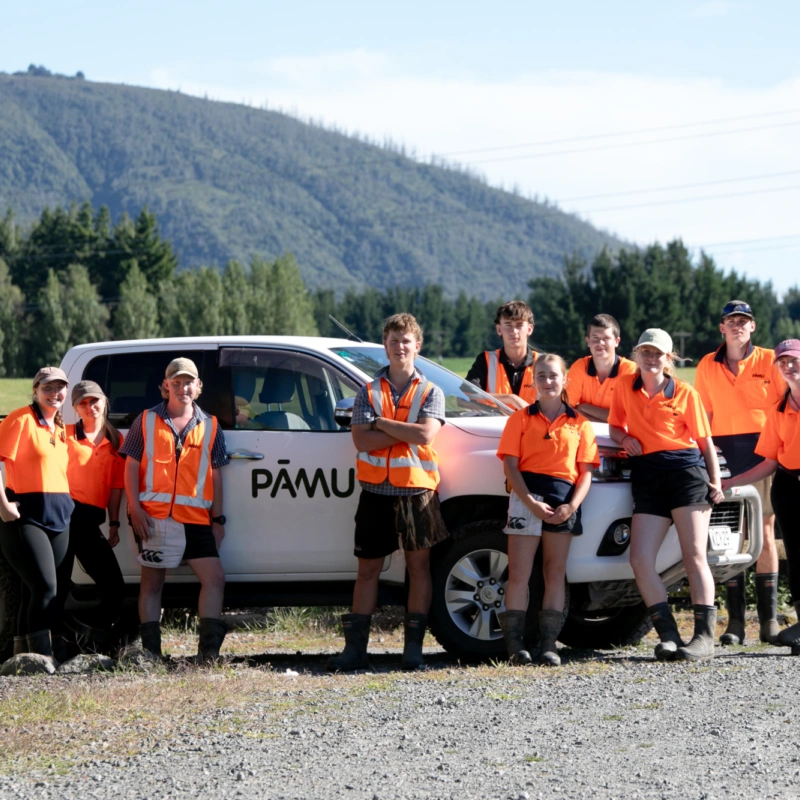
Pāmu now manages nearly 360,000 hectares across 112 farms. As a state-owned enterprise, it is expected to operate as a successful business, be as profitable and efficient as comparable private companies, be a good employer, and show social responsibility to the communities it works in.
Its purpose is to lead the delivery of commercial and sustainable agriculture solutions for future generations. The company is a national exemplar of kaitiakitanga, with more than 10,000 hectares protected in perpetuity through QEII covenants, and biodiversity enhancement embedded across its farming systems.
Pāmu continues to invest in sustainability, including reducing greenhouse gas emissions, adapting to climate change, and adopting next generation farming technologies.
Marking 140 years of supporting New Zealand agriculture
In 2026, Pāmu marks 140 years since the Government first put Crown land to work to grow New Zealand’s farming sector. That legacy runs through everything the company does today. The scale has changed, the systems have evolved, and expectations have lifted, but the objective remains the same, that is to support New Zealand through productive, sustainable agriculture, and to steward land well for future generations.
The 140-year anniversary is an opportunity to acknowledge our people, partners, and the communities who have shaped the organisation over more than a century, and to recognise the ongoing contribution of Pāmu to New Zealand’s food and fibre sector.