About Pāmu
Farming for Aotearoa New Zealand since 1886
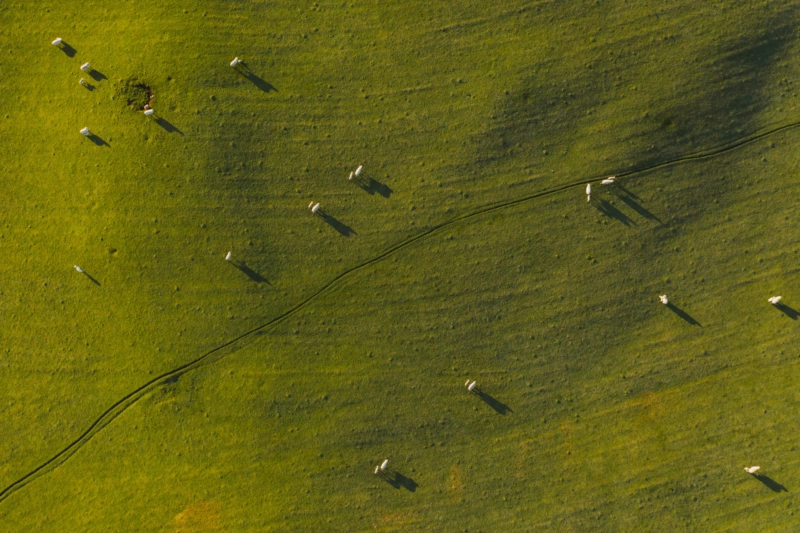
Pāmu is a state-owned farming business managing a diverse portfolio of dairy, livestock, forestry and horticulture operations.
Our Name
Pāmu is the brand name for Landcorp Farming Limited. "Pāmu" means "to farm" in te reo Māori. It reflects who we are and what we do.
He mauri tō te wai, he mauri tō te whenua, he mauri tō te tangata.
We acknowledge the life force and essence of the water, the land and the people.
This whakataukī reflects our approach to farming. Every day, our farm teams act as kaitiaki, looking after the land entrusted to us and working to leave it in good condition for future generations.
What we do
We have been farming across Aotearoa New Zealand since 1886. Today, we manage nearly 360,000 hectares across 112 farms, making us the largest pastoral farming businesses in the country.
Our operations include dairy, sheep and beef, deer, horticulture, arable and forestry. Across our farms, our people care for more than 1.3 million stock units each year.
We also invest in sustainability and climate adaptation, protect areas of high conservation value, and adopt modern farming technologies.
How we farm
To put our role as kaitiaki into practice, we focus on the following:
-
We run a commercially profitable business.
-
We care for our animals, people and environment.
-
We use technology and practical farming experience to keep improving.
-
We take a long-term view of the land we farm.


Our purpose is to lead the delivery of commercial and sustainable agriculture solutions for future generations.
Our Role in Aotearoa
Guided by the State-Owned Enterprises Act 1986, our mandate is to operate as a successful business while being profitable, efficient, socially responsible, and a good employer.
Our Strategy
Our strategy sets the direction for how we farm and grow our business through five key priorities:
-
Deliver Operational Excellence
-
Grow people in a safe environment
-
Change land use with integrated farming systems
-
Partner to meet market opportunities
-
Enrich the natural world
Build your future with Pāmu
Whether you are looking for a career on farm, in horticulture, or in one of the many teams that support our operations, there's a place for you at Pāmu.
Pāmu has its roots in the Crown’s management of large-scale pastoral lands. Here's a snapshot of our journey.
Our story began in 1886 with the Government’s farming and land development activities. In 1987, Landcorp Farming Limited was established as a State-Owned Enterprise. Today, operating as Pāmu, we manage nearly 360,000 hectares of land across more than 100 farms, continuing a long history of farming and land management on behalf of New Zealanders
Read our full story.

Pāmu celebrated 140 years of supporting New Zealand agriculture, recognising a legacy that began in 1886 and continues through profitable, sustainable farming and stewardship for future generations.

The first batch of nine apprentices arrives at Aratiatia Farm as Pāmu launches its Apprenticeship Scheme, beginning hands-on training in dairy and livestock farming while working toward qualifications and future permanent roles in the industry.

Pāmu creates new pathways to farm ownership by offering share and contract milking opportunities on selected dairy farms to help grow the next generation of New Zealand farmers and strengthen its commercial performance.

Cyclone Gabrielle hits 24 Pāmu farms. Seven on the East Coast of the North Island are particularly impacted with major slippage, damage to infrastructure — including roads, tracks and bridges — and significant loss of access into those farms.

Pāmu Board appoints new Chief Executive Officer, Mark Leslie.

New ‘Kiwi Avoidance Training’ in place to ensure dogs don’t harm kiwi on Northland farms.

Pāmu deer milk goes on sale in South Korea in ‘Deerest’ products. Molesworth Homestead is reopened after an extensive rebuild due to the 2016 Kaikoura Earthquake.

Pāmu deer milk wins awards for Innovation and Novel Food and Beverage, while also entering the cosmetic market in South Korea. Pāmu venison continues to impress across Auckland and the USA.

Pāmu Academy launched – a transformative initiative in safety leadership. The Academy is a joint venture with Australian health and safety specialists, Wilson Consulting Group.

Landcorp partnered with Duncan Venison NZ to launch Pāmu Venison domestically, making the product available to exclusive restaurants and the everyday New Zealander.

New look Landcorp logo unveiled and new product brand, Pāmu launched. Landcorp commits to be ‘carbon neutral by 2026’ on land it owns utilising its significant forestry portfolio and areas for potential planting.

Landcorp launches a new product line with the establishment of Spring Sheep Dairy in the central North Island for milking sheep.

A new strategic plan is adopted to extract more value in niche markets for products. A new purpose is also introduced to 'Transform New Zealand Farming'. Landcorp becomes sole owner of livestock genetics business, Focus Genetics.

New CEO Steven Carden is appointed. 'Play it Safe' safety programme is launched across the country and sees a 200% increase in near miss reporting.

Landcorp manages 16 dairy properties in the Central Plateau for overseas company, Shanghai Pengxin Group.

Landcorp becomes a shareholder in FarmIQ, a Primary Growth Partnership, to develop a consumer driven, integrated value chain for red meat. Landcorp forms Focus Genetics, a joint venture company to market sheep, beef and deer genetics.

In 2010, Landcorp registers its 100th conservation covenant with QEII at Dale Farm in Southland. By 2014 the 150th covenant was registered at Mangatoa in Northland, a total of 8,830 ha protected.

Bold development practices on the West Coast turn marginal land into strong-performing dairy country. The practices of flipping and humping and hollowing breaks an iron pan preventing drainage and allows free-draining soils.

Landcorp wins Corporate Conservation Award from Department of Conservation.

“Landcorp has progressed over the past 20 years from a collection of scattered farms into a highly productive, integrated, progressive company, focused on the future.” Bernard Card

The Landcorp Wellington office moves to Allen Street and “Footprints to the Future” is published – Landcorp’s first 20 years. Farms are grouped into clusters, managed by a Farm Business Manager whose role is more business than operational farm management.

Five-year strategic plan builds on changes and improvements since 2001. Broadband communication is extended to all farms. Landcorp begins marketing its genetics to the industry under the brand, Sires of Proven Value.

Landcorp becomes a billion dollar company with assets of $1,027,288. With constraints on farming in the Taupō catchment Landcorp plans to exit several Taupō properties. New lease on Molesworth signed with the Crown.

Moutoa dairy farm complex was flooded after a breach of the Manawatū River spillway. Almost all stock were saved. Over four months the property was completely regrassed, and major reconstruction of houses, dairy sheds, races and fences was undertaken.

Landcorp entered a joint venture with Agriculture New Zealand to train school leavers in livestock farming techniques called the Landcorp Future Farmer programme, which qualifies for NZQA standards.

Landcorp employs dairy staff directly changing from an earlier policy of only having share milkers. Major development expands the dairy programme with the development of new farms in Northland at Sweetwater and on the West Coast at Cape Foulwind and Weka.

Board adopts five-year strategic plan calling for increased productivity and diversification into dairying and deer farming. New CEO Chris Kelly is appointed. Landcorp Estates Ltd incorporated to develop and sell land suitable for higher value use.

Landcorp’s Work Safety programme becomes accredited under the ACC Workplace Safety Management Programme.

Computers were introduced on a number of farms to facilitate reporting, improve communication and cut down on delays inherent in earlier manual systems.

Landcorp’s geneticist, Dr Geoff Nicoll, received the McMeekan Memorial Award from the New Zealand Society of Animal Production for his contribution to animal science in the New Zealand Livestock industry.

Landcorp receives the Sir Arthur Ward Award from the New Zealand Society of Animal Production for the application of science to agriculture.

Landcorp withdrew from the direct marketing of meat as procurement became an issue and better prices being paid to farmers meant that Landcorp’s additional margins were diminishing.

New subsidiary Landcorp Meat Ltd established in Wanganui to package and market beef. The final processing and marketing was carried out by Landcorp.
Development and introduction of FarmPride quality assurance programme on all farms. Showing Landcorp’s commitment to quality and excellence in all aspects of the operation.

A joint investment in a CT scanner to speed up the genetic development of animals in the breeding programmes by improving the accuracy of selections beyond what is possible by only using ultrasound.
Landcorp sells its property companies and farming becomes core business.

The company’s work safe Health and Safety policy initiated. Farming restructures down to four regions – Whangarei, Rotorua, Christchurch and Invercargill, closing several local offices.

Landcorp acquires a small meat processing plant in Christchurch (Dave Graham Processing Ltd). Starts marketing under the Landcorp brand and sells Landcorp branded products in supermarkets.

The business moves from farming Angora goats for mohair production and imports Boer goat genetics as a meat producing animal. This continued until 2005. When business tailed off all remaining goats were sold to local breeders.

Landcorp establishes a genetics unit, producing the largest coordinated animal breeding programme in the southern hemisphere. This led to the development of two new sheep breeds.

Land Corporation begins operations to handle the Government’s commercial farming and land management operations. It was one of several new organisations to be born out of the restructuring of the former Department of Lands and Survey.
Q&A: A grounded perspective on our roles and responsibilities
Q: Does Pāmu pay tax, rates, or interest?
A: Yes. Like any responsible New Zealand business, we pay tax, meet our rates obligations, borrow commercially when needed, and fund our operations through our own revenue — not taxpayer handouts.
Q: How is Pāmu governed?
A: As a State-Owned Enterprise, we are governed by the State-Owned Enterprises Act 1986 and the Companies Act 1993. This means we operate as a commercial business while being accountable for public assets.
Q: What about local rates?
A: Pāmu pays local council rates like any other farmer — $4.3 million in FY25.
Q: How do you fund operations and projects?
A: Day-to-day operations and capital projects are funded from profits generated by our farming activities or through commercial borrowing with New Zealand banks. We do not receive direct taxpayer funding for operations.
Q: What about your expenses?
A: Wages, infrastructure, and corporate costs are covered through our commercial activities.
Q: What is the role of Pāmu with public land?
A: We manage public land to deliver strong value to New Zealanders through farming, responsible land management, and strong commercial performance.


