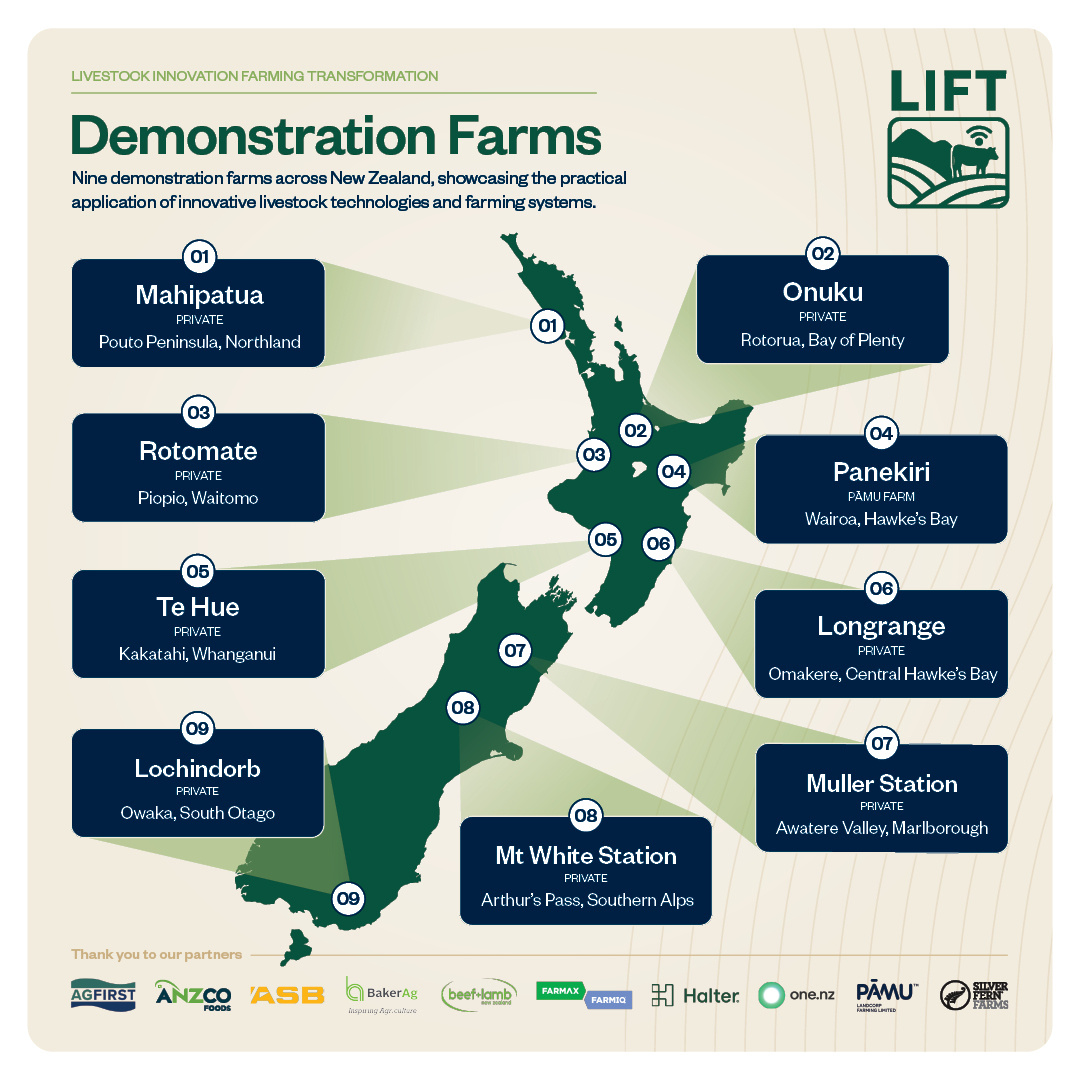
High country stations, mixed sheep and beef businesses, Māori-owned farms, corporate and family operations are among the nine commercial farms now taking part in the Livestock Innovation Farming Transformation programme, known as LIFT.
The farms are located across New Zealand’s hill country farming areas and represent a wide range of farming systems, landscapes and operating conditions:
- Mahipatua, operated by Pouto Topu A Trust, Northland
- Onuku, operated by Onuku Maori Lands Trust, Bay of Plenty
- Rotomate, King Country
- Te Hue, operated by Waipuna Farms, Whanganui
- Panekiri, a Pāmu farm, Hawke’s Bay
- Longrange, operated by Horizon Farming, Hawke’s Bay
- Muller Station, Marlborough
- Mt White Station, Canterbury
- Lochindorb, Otago
The announcement marks LIFT’s move from programme establishment into on-farm delivery. Participating farms have been onboarded, deployment of virtual fencing technology is under way, and farm teams and supporting consultants are beginning the work needed to understand where the technology may add value within each farming system.
The nine farms were chosen from a national long list by a selection panel using common criteria. Together, they cover major sheep and beef farming regions and include variable farm scales, land types and ownership models. Their role is to use the technology in normal commercial farming conditions, test practical farm system changes and share what they learn with farmers and the wider sector.
“Virtual fencing creates new opportunities to improve profitability and environmental performance, but the technology on its own is not the answer. What matters is how farmers use it to change grazing, stock management and the wider farm system. These nine farms will give the sector practical evidence from real businesses operating in very different conditions.”
LIFT was launched in June as a five-year, $8.5 million programme led by Pāmu. The Ministry for Primary Industries is investing $3.5 million through the Primary Sector Growth Fund, alongside investment and support from programme partners. Launched as part of MPI’s Land Use Flexibiility funding package, LIFT’s purpose is to give farmers trusted examples of how virtual fencing and related farm system changes work under commercial conditions.
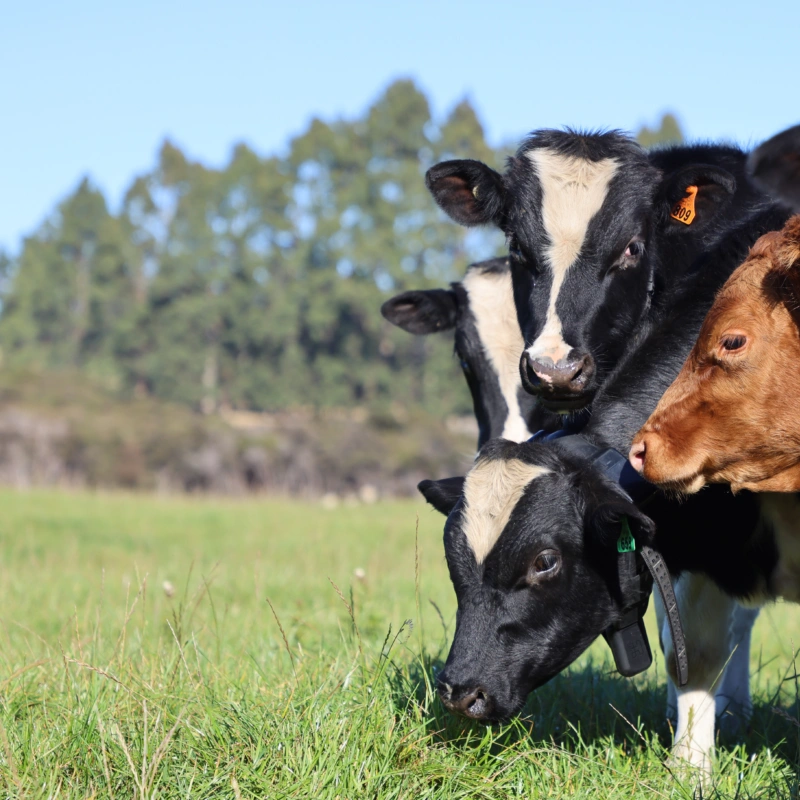
Since launch, the programme has begun collaring and training cattle, onboarding farm teams and working with farmers and independent consultants to build the production, financial and environmental baselines that will underpin the programme’s analysis. This includes establishing FARMAX and Overseer models for each farm, alongside early work to identify potential changes to grazing, land management and farm system performance.
Participating farmers have also begun meeting as a national group. Their early conversations have extended beyond the technology itself into pasture management, labour, animal performance, water infrastructure, environmental benefits and the day-to-day decisions needed to make a different farming system work.
LIFT Programme Lead Charlie McCaig said that shift in conversation was an important early sign of what the programme could contribute.
“The farmers joined to test virtual fencing on their farms, but the conversations are already much broader than the technology. They are comparing notes about grazing, labour, water, stock performance and how their businesses might operate differently.”
One of the farms involved is Lochindorb, a third-generation family farming business in Otago operated by Lyndon and Jade McNab.
The 2,500-hectare property includes flats and hard hill country and supports both sheep and beef. The farm is exploring whether more flexible grazing control can improve pasture quality and feed grown across harder-to-reach areas, while also protecting sensitive parts of the property. The farm is also interested in the potential for creep grazing, improved youngstock growth and reduced time spent moving and managing cattle.
Lyndon McNab said participation was an opportunity to test the technology as part of the whole farm business rather than treating it as a stand-alone tool.
“We want to understand what this lets us do differently. Lochindorb has a mix of easier and challenging country, so the opportunity is not simply replacing a fence. It is being able to manage grazing more deliberately, make better use of the feed we grow and protect areas that matter to us.”
Each farm is working with an independent farm consultant to provide farm systems advice, update models, test potential system changes and track farm performance. The programme will assess production, financial, environmental and practical outcomes, helping build a clearer picture of where virtual fencing creates value and what trade-offs are involved.
The programme will also host field days and develop farmer stories, practical guidance and annual evidence reports. Participating farms will remain normal commercial businesses, retain control of their farm decisions and share agreed information so programme outcomes can be assessed.
LIFT Programme Lead Charlie McCaig said the programme would be open about both the opportunities and the practical challenges.
“We are not setting out to prove that one system will work everywhere. We want to generate credible information about where virtual fencing fits, what needs to change around it, what it costs and what the trade-offs are. That means sharing the difficult lessons as well as the positive ones.”
Programme partners include the Ministry for Primary Industries, Pāmu, Halter, ASB, Silver Fern Farms, ANZCO Foods, Farmax and FarmIQ, Beef + Lamb New Zealand, AgFirst, BakerAg and One NZ.
For additional information go to https://www.liftprogramme.co.nz