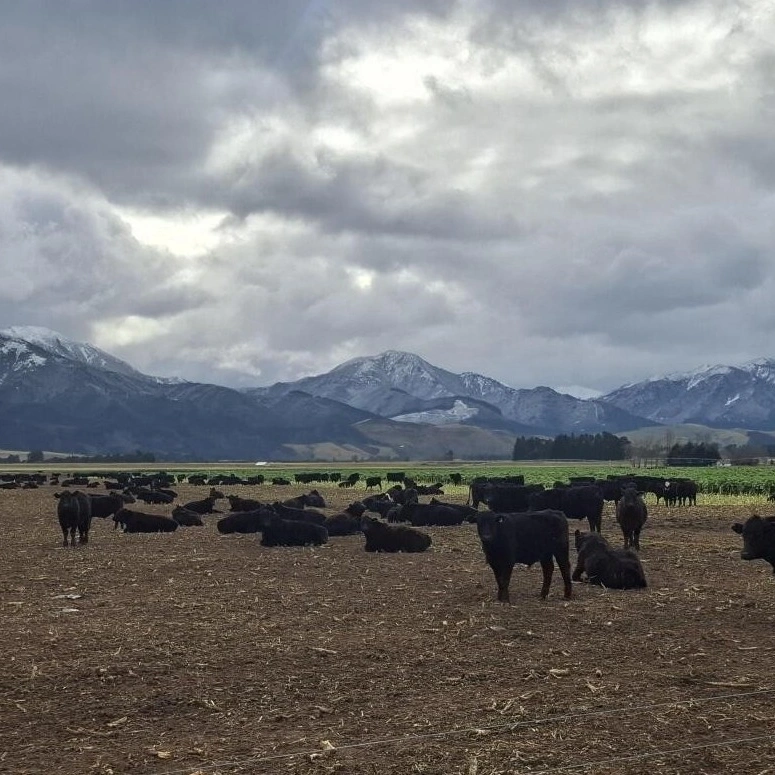
Winter cropping plays an important role on some Pāmu farms, helping ensure livestock have access to feed during the colder months of lower pasture growth. While it represents a small proportion of our farming footprint, we recognise it requires careful management to protect animal welfare and the environment.
All farms with winter crops complete detailed grazing plans before grazing begins. These plans consider factors such as paddock selection, waterway protection, critical source areas, animal welfare, shelter, and adverse weather responses.
Throughout winter, our teams monitor conditions closely and take practical steps to protect waterways, minimise soil damage, provide adequate feed and shelter, and respond to changing weather.
Our goal is to balance animal welfare, environmental stewardship, and farm productivity, while continually improving how winter crop grazing is managed across Pāmu.
Over recent years, Pāmu has proactively invited agencies such as MPI and Regional Councils onto our properties to review our approaches firsthand, provide feedback, and help identify opportunities for further improvement.
Frequently asked questions
What is winter cropping?
Winter cropping involves feeding livestock crops such as swedes, kale, fodder beet, or other forage crops grown specifically to provide feed during winter when pasture growth slows.
Why does Pāmu use winter cropping?
Winter cropping helps ensure livestock have access to sufficient feed during colder months. It is used on some Pāmu farms as part of a broader feed management and agronomic programmes.
How does Pāmu manage environmental risks?
All farms with winter crops prepare grazing management plans that identify environmental risks and outline actions to protect waterways, wetlands, soil health, and critical source areas in line with Farm Environment Plans.
How does Pāmu protect animal welfare during winter grazing?
Grazing plans include animal welfare considerations such as feed allocation, access to water, shelter, stock movement, and responses to adverse weather conditions.
What happens during wet weather?
Farm teams closely monitor weather and ground conditions. Where required, grazing plans are adjusted, and additional measures are implemented such as additional feeding, to protect livestock welfare and minimise environmental impacts.
Does Pāmu comply with winter grazing regulations?
Yes. Our farms are expected to meet all applicable regulatory requirements and Pāmu standards, with a strong focus on planning, monitoring, and continuous improvement.
How does Pāmu improve its winter grazing practices?
We regularly review our performance, apply lessons learned, and seek feedback from regulators and industry experts to continually strengthen our approach to winter crop grazing.


