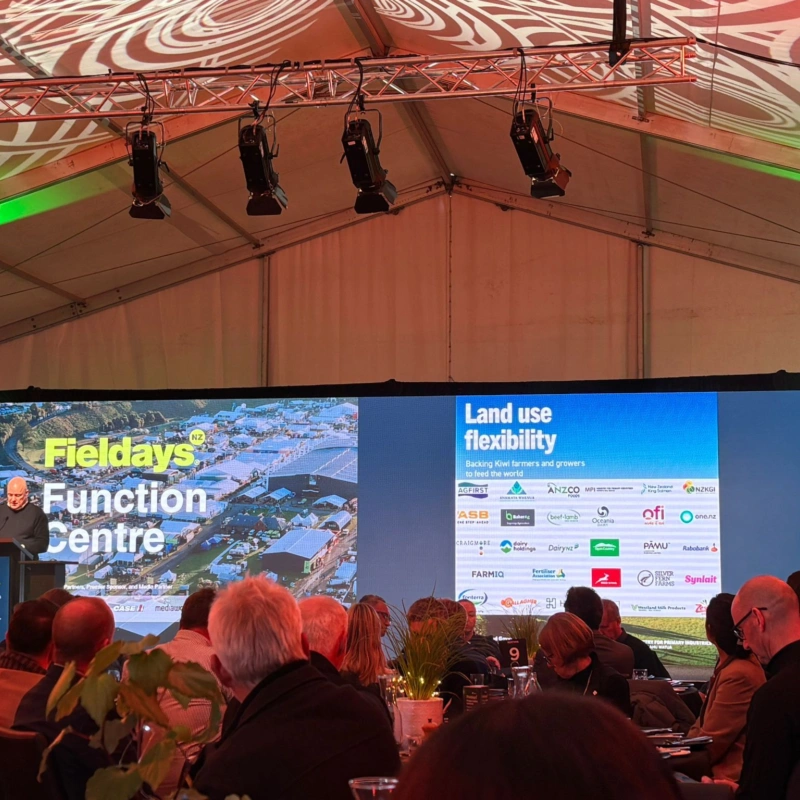
Pāmu (Landcorp Farming Limited) has welcomed today’s announcement by the Prime Minister Rt Hon Christopher Luxon and Minister of Agriculture Hon Todd McClay of the Livestock Innovation Farming Transformation (LIFT) Programme, and is proud to lead on behalf of the livestock sector a major national initiative to support New Zealand’s sheep and beef farmers to lift productivity, resilience and environmental performance.
By partnering with farmers to adopt and develop virtual fencing-enabled grazing systems, LIFT aims to unlock the productivity potential of hill country while protecting sensitive environments. Together, partners aim to reshape the future of hill country farming by building the confidence, capability, and system alignment needed to scale smarter land use and deliver value from farm to market.
Livestock farmers are under pressure from rising costs, tighter land use and growing market and environmental expectations. LIFT will give them trusted, independent examples of how virtual fencing and wider system changes can work on-farm, helping build confidence to make decisions about technology investment and corresponding system changes. With the right support and expertise, those decisions can translate into measurable improvements in farm performance and sustainability.
The market context reinforces the importance of this work. In 2025, meat and wool exports exceeded $12 billion, representing around 20% of New Zealand’s total food and fibre export revenue. More than 75% of those earnings come from red meat and wool. With New Zealand aiming to double export value by 2034, the performance of the red meat sector will be critical to achieving that ambition, while continuing to support regional economies and drive innovation across the sector.
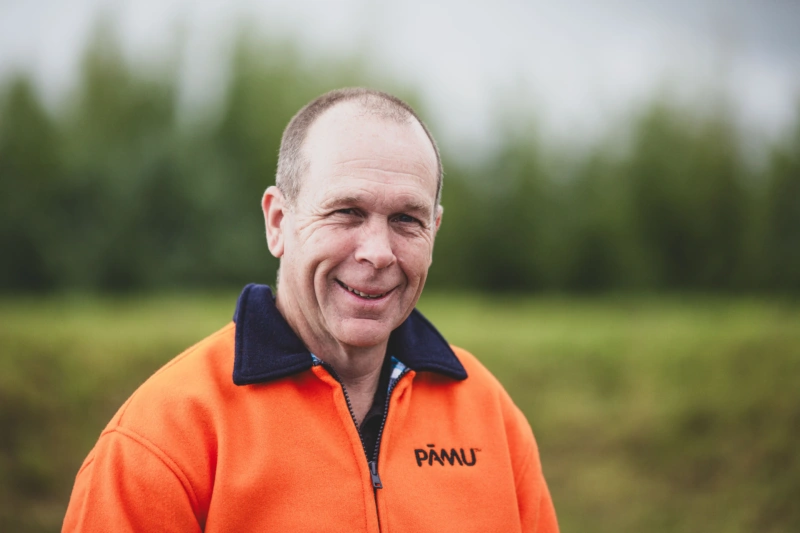
“LIFT will show farmers how virtual fencing works in practice, on real farms, and what it can mean for farm performance,” said Pāmu Chief Executive Mark Leslie.
MPI is investing $3.55 million through the Primary Sector Growth Fund in the five‑year $8.47 million Pāmu-led project, in partnership with a pan‑sector group of partners spanning the red meat supply chain. Partners include Pāmu, Halter, ASB, ANZCO Foods, Silver Fern Farms, FARMAX/FarmIQ, Beef + Lamb New Zealand, AgFirst, One NZ, and BakerAg NZ.
Independent economic modelling shows LIFT has the potential to deliver:
- an additional $536 million per year in farm‑gate returns by 2036, and
- a $1.25 billion uplift in export value by 2036.
“This programme will help farmers unlock new opportunities while contributing to New Zealand’s economic future,” Mark Leslie said.
Traditional fencing and grazing systems are often costly, inflexible and difficult to implement on hill country, limiting pasture management and farm productivity. LIFT responds directly to these challenges, exploring how wearable and virtual fencing technologies can deliver better outcomes at lower cost and with greater adaptability, building on learnings from Pāmu’s early adopter farms (Kapiro, Eweburn and Duncraigen) and scaling these insights to support wider adoption across the sector and within Pāmu’s own operations.
LIFT is establishing nine regional demonstration farms across the country, including Panekiri, a Pāmu farm on the East Coast. These farms will test system changes under commercial conditions and share learnings through farmer‑led extension.
Key principles underpinning the programme include:
- focus on farm system change, not promoting a single product or provider
- independent validation and open data
- farmers retain control of their data and decisions
- animal welfare is monitored and reported
- environmental impacts are measured, modelled and shared
- improved productivity supports diversification and resilience
This programme represents a significant opportunity to reshape the future of hill country farming in New Zealand. We’re proud to be part of a coordinated, sector-wide effort to lift productivity, resilience and environmental performance at scale.


